- recipe_pidada-snack-and-drink_en
Downloads:
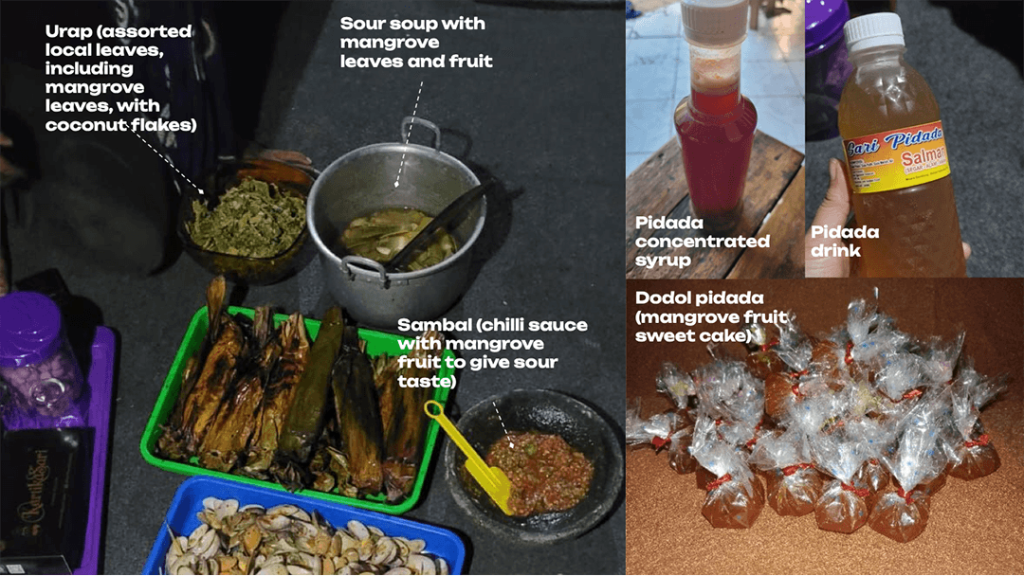
Gifting is a tactic in which bodily, sensory, and affective materiality becomes a form of solidarity. Yet gifting is always risky: will they like it? When we first gathered in 2023, Labtek Apung arrived with mangrove food, syrup, and dried fish. These foods circulated among riparians, who found points of connection through shared tastes.
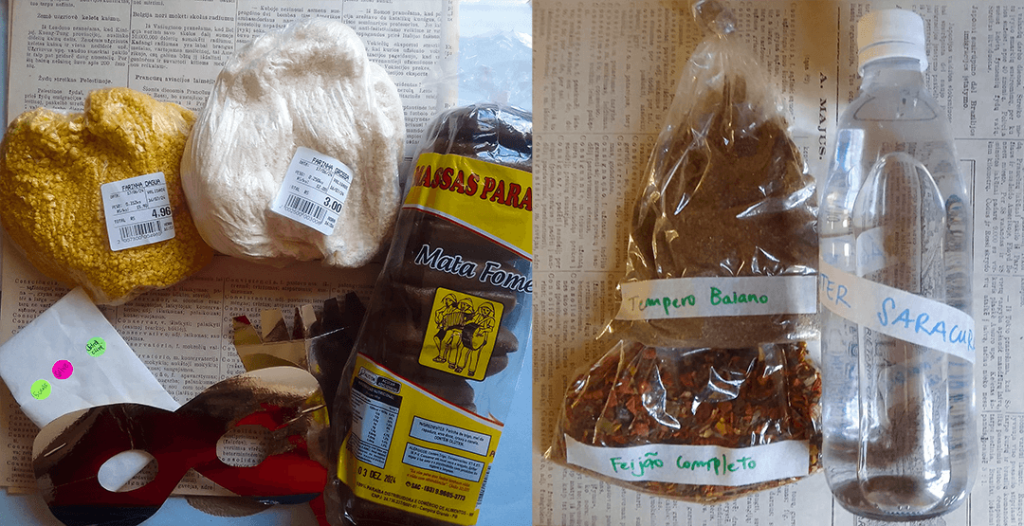
When riparians travelled back from São Paulo, they brought Saracura water and spices. Cookies, two types of cassava flour, and a model of a Saracura mask also made their way to Berlin.
Gifts are never “free.” They create obligations, reciprocities, and relationships—sometimes liberating, sometimes coercive. Before travelling, we discussed at length the ethics of gifting seeds, soils, and other living materials. In colonial histories, gifting was often staged as a performance of friendship while establishing extractive asymmetries: imperial expeditions offering beads, cloth, or tools in exchange for land, labour, and access to resources. The colonial gift was rarely innocent; it bound recipients into networks of dependency that served empire. In riparian contexts, gifting seeds or soils risks echoing these extractive genealogies, even when the intention is solidarity.
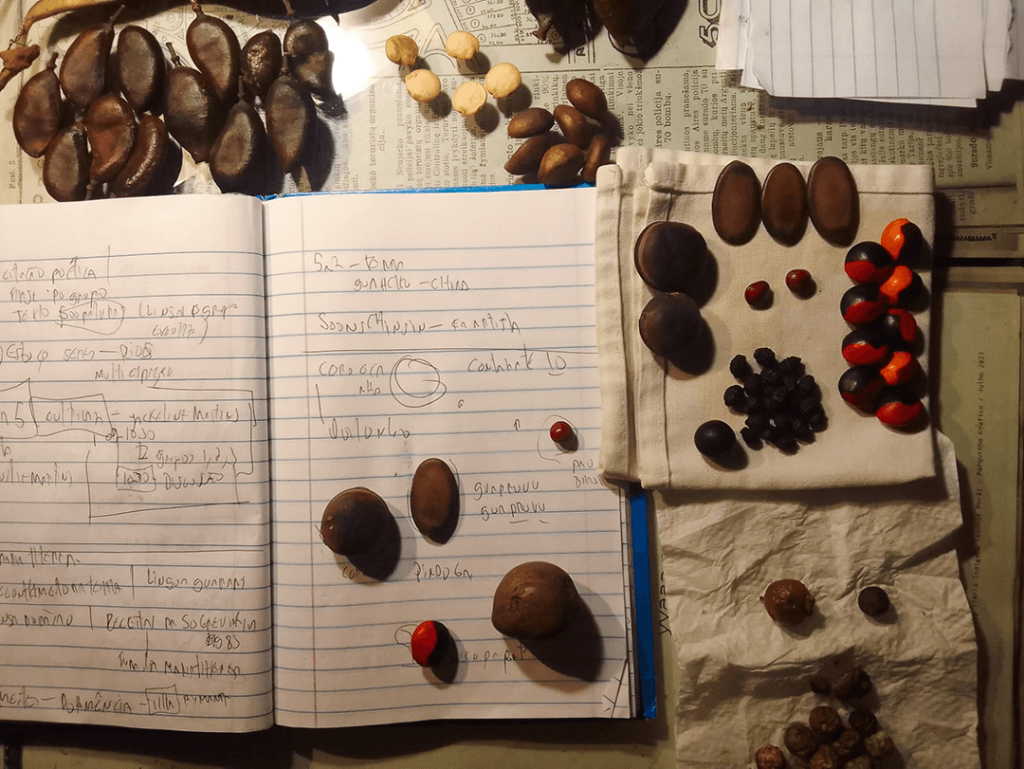
Soils and seeds are living archives—repositories of microorganisms, genetic memory, and local histories. Gifting them can be an act of ecological solidarity, a way to keep threatened varieties alive or share adaptive knowledge across watersheds. Yet the risks remain: soil may carry pathogens or invasive species; seeds may be appropriated, patented, or cultivated out of context, stripped of their relations to local cosmologies and practices. Such gifts are double-edged—capable of nourishing or displacing, of supporting struggles or unintentionally undermining them.
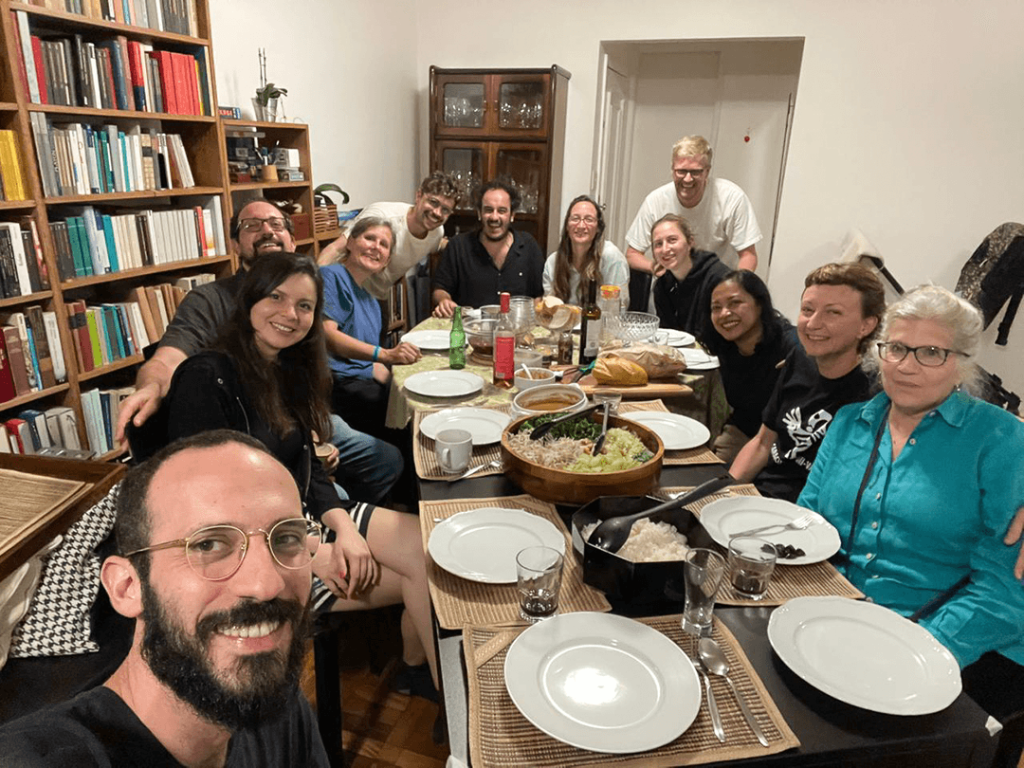
Hosting artists, activists, and academics from distant riverbanks requires navigating not only logistics but also deep differences in taste, climate, and memory. Food here is more than sustenance; it is a medium of translation, a sensorium through which affinities and divergences are tested. Sharing a meal—chewing the same root or sipping the same broth—creates a brief commons of embodiment. The gift becomes a rehearsal for the alliances river struggles demand: attentive, risky, and continually renegotiated.
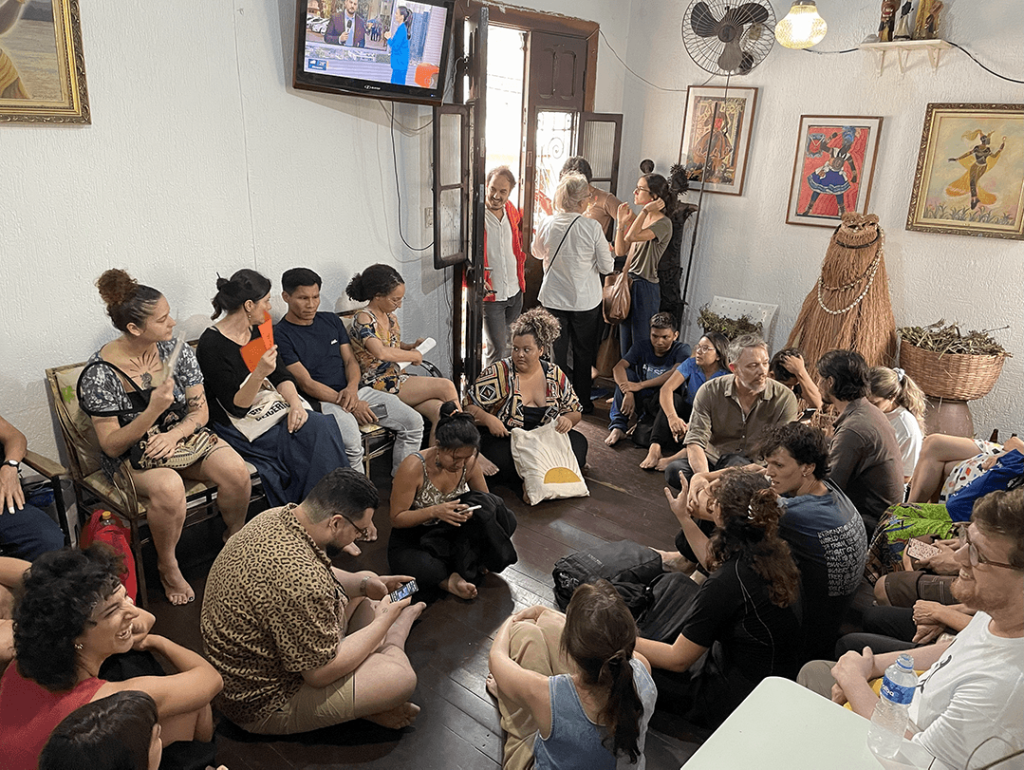
In São Paulo, we were hosted in the backyard gardens of restaurant owners along the Saracura riverbank and ate rice and beans farmed and cooked at the community kitchen of the occupied house Nove de Julho. We removed our shoes to sit on the ground at the Candomblé terreiro of Mãe Jennifer, and we were generously welcomed by the Museum of Indigenous Cultures.
Gifting is a world-making practice. It binds economic, spiritual, political, and affective domains. Gifts often carry parts of the giver—material and relational—extending personhood across distance. In riparian struggles, gifting food, seeds, or soils is never merely symbolic; it moves the material agency of one river’s ecology into another’s domain. It translocates more-than-human relations, reshaping tastes, microbiomes, and even the politics of place.
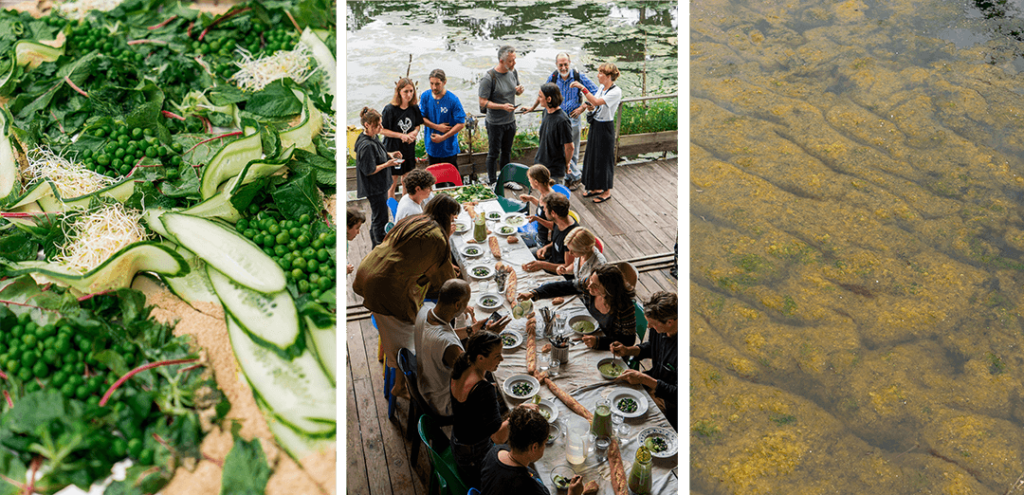
Food artist: Julia Klink (das taktische k), cooking for the festival team—drawing inspiration from the site, from algae, creating rivers.
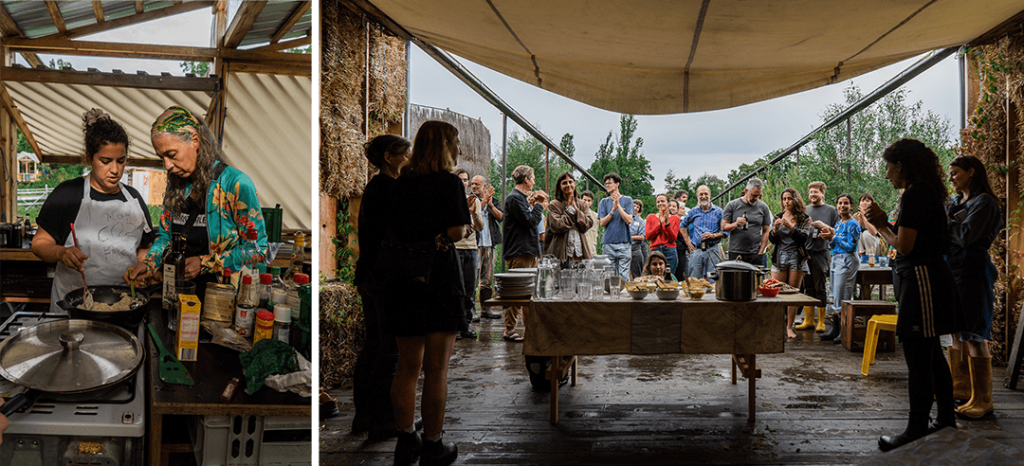
Cooking Feijoada
16–18h: Cooking Session — Kitchen
18–19h: Public Buffet
Co-organisers: LebensMittelPunkte KulturNetz Kreuzberg with Salve Saracura
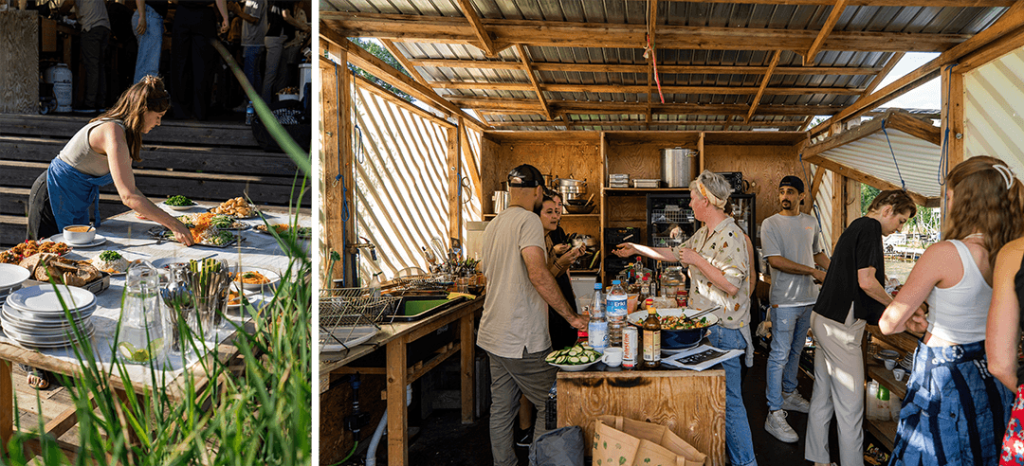
Cooking Gado-Gado
16–18h: Cooking Session — Kitchen
18–19h: Public Buffet
Co-organisers: LebensMittelPunkte KulturNetz Kreuzberg with Labtek Apung