- recipe_blockade_hafengruppe
Downloads:
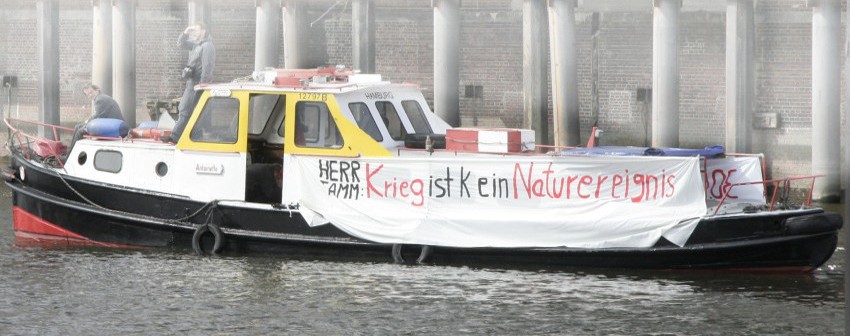
Blockading is a tactic organized by political movements, especially protest movements. It enables the physical obstruction of access, commerce, or communication, while also drawing attention to issues in a symbolic way. Common practices such as sit-ins, glue-ins, lock-ons, claiming high ground, and constructing material barricades are used to make the blockade harder for state actors to control and dissolve. As a form of riparian struggle, members of the Hafengruppe Hamburg have organised blockades directed at the city as a nodal point for trade – also beyond the port and its waters – over time.
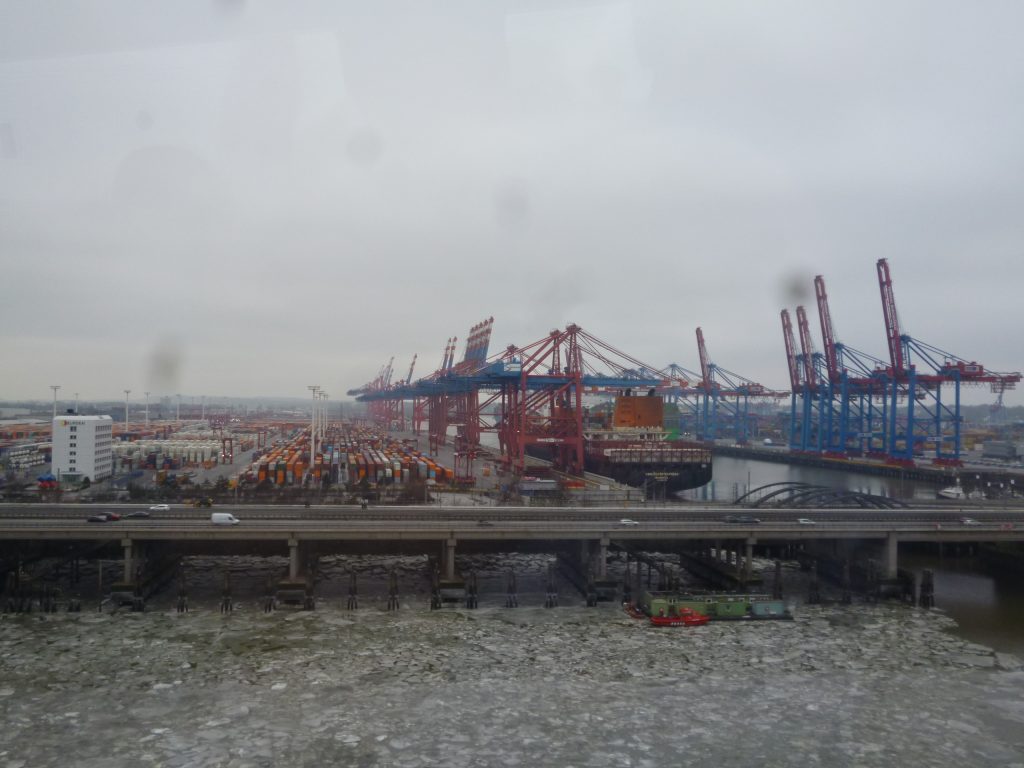
As part of the “Hamburg Blockade Plenum,” which operated as part of an interventionist peace movement, blockades were organized in the 1980s at the office building of Rothfos—then and now the world’s largest green coffee trader—in Hamburg’s Speicherstadt (a historic warehouse district in the port of Hamburg). This action was directed in particular against the financial support provided by Rothfos and its trade partners to the coffee oligarchy that had seized power in El Salvador through a coup. This action also played an important role in the formation of the Hamburg Harbour Group, which began offering “Third World Harbour Tours” that same year. At the time, daily newspapers carried advertisements for the campaign and supported solidarity actions with El Salvador.
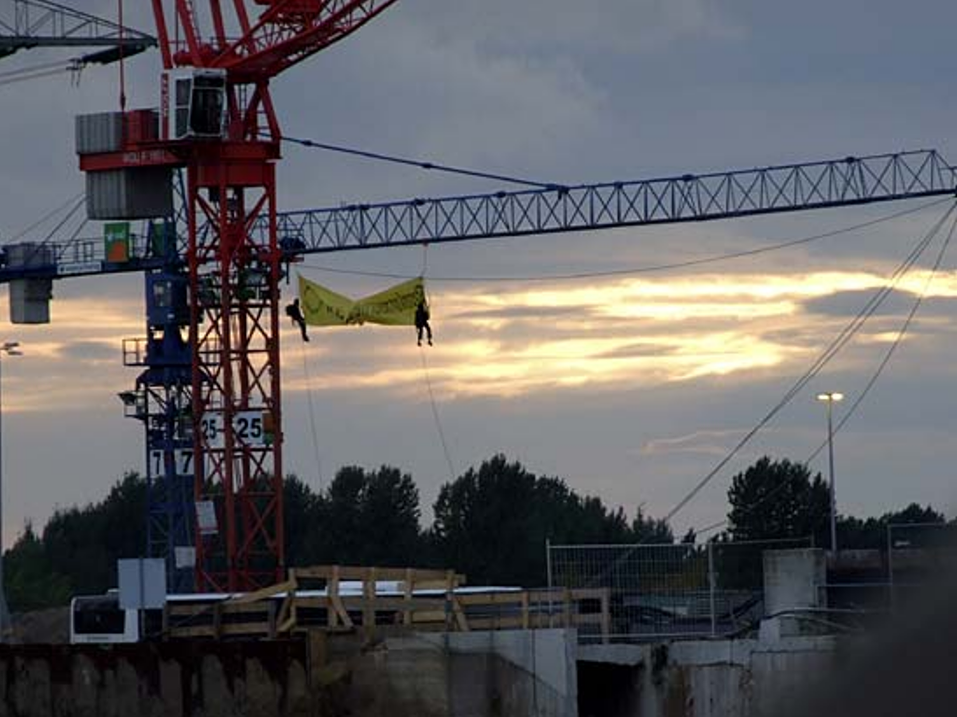
From 2008 to 2013, numerous initiatives in Hamburg worked against the construction of a new large coal-fired power plant on the Süderelbe (the southern part of the river Elbe) by the Vattenfall energy corporation. Members of the Hafengruppe participated in and supported many of these actions. For example, as part of an anti-racism and climate camp in 2008, a construction site occupation took place, which was cleared by police. Five activists climbed high construction cranes and rappelled down carrying a banner that read, “Expropriate the energy companies.” The alternative harbour tour, which took place in the early evening at the Port of Hamburg that day, spontaneously changed its route to include a detour past Moorburg to help raise awareness of this action.
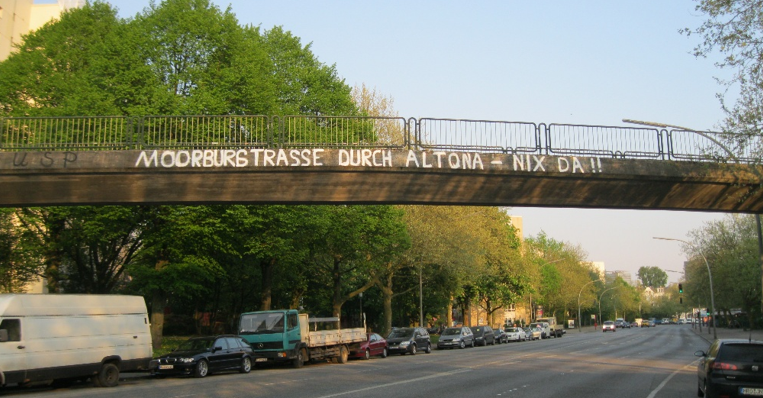
In 2010, one member of the Hafengruppe participated in long-term local protests against the construction of a district heating pipeline by the power plant operator through a green corridor in Altona. As part of these protests, trees were occupied for months to prevent the deforestation necessary for the pipeline’s construction. The construction of the pipeline was ultimately halted by a court order. This €400 million project failed, on the one hand, because the impact of the pipeline construction site on local residents would have been extremely severe. On the other hand, it was easier for activists in that neighborhood to organize sustained protests and blockade than it was at the construction site itself or in Moorburg, including what appears to have been a successful effort to network with a large number of groups and residents.
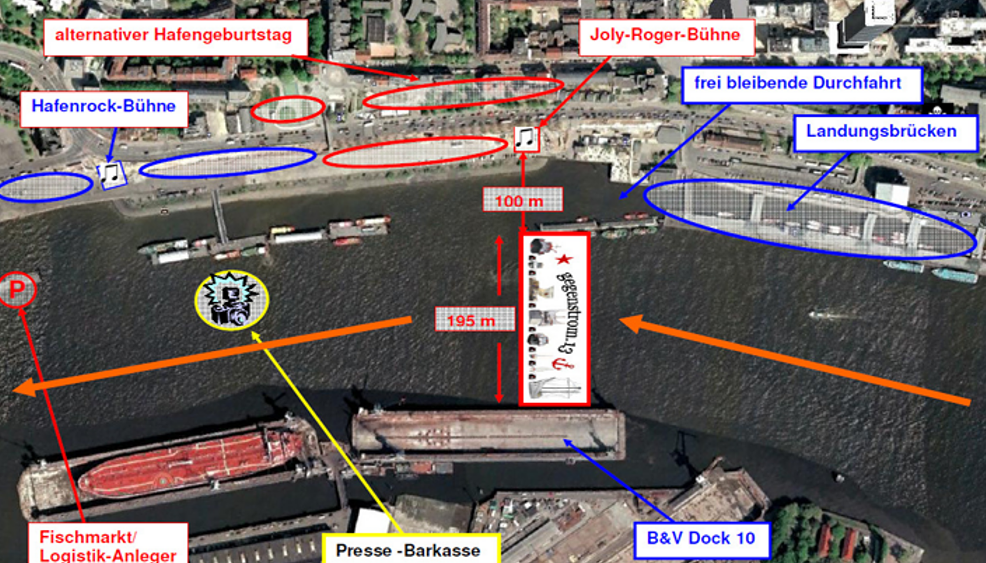
In 2013, when the coal-fired power plant at the Süderelbe was already generating electricity primarily with coal from Colombia, an alliance supported by many organizations, including the Hafengruppe, staged a symbolic blockade of the Elbe River with ships. The blockade was part of the counter-event to the annual harbour anniversary festival. A few years later, the power plant was taken off the grid for economic reasons.