- recipe_harbourtour_hafengruppe
Downloads:
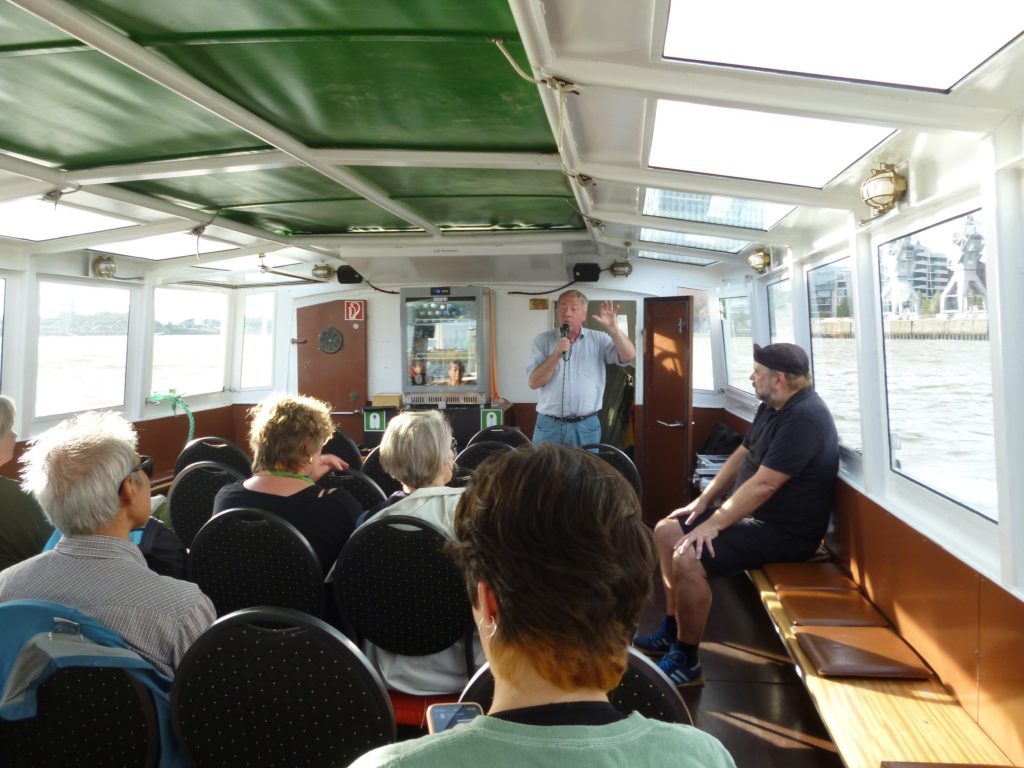
The tactic of a subversive harbour tour connects education with movement. It directs participants’ attention to transshipment places and goods in order to re-politicize and contextualize them within broader networks of inequality. The places and materials act as tangible evidence of these inequalities and provide an opportunity to share situated knowledges about planetary connections of violence and resistance. What is more, the format of an excursion as a leisure activity attracts audiences who might otherwise not be interested in such connections.
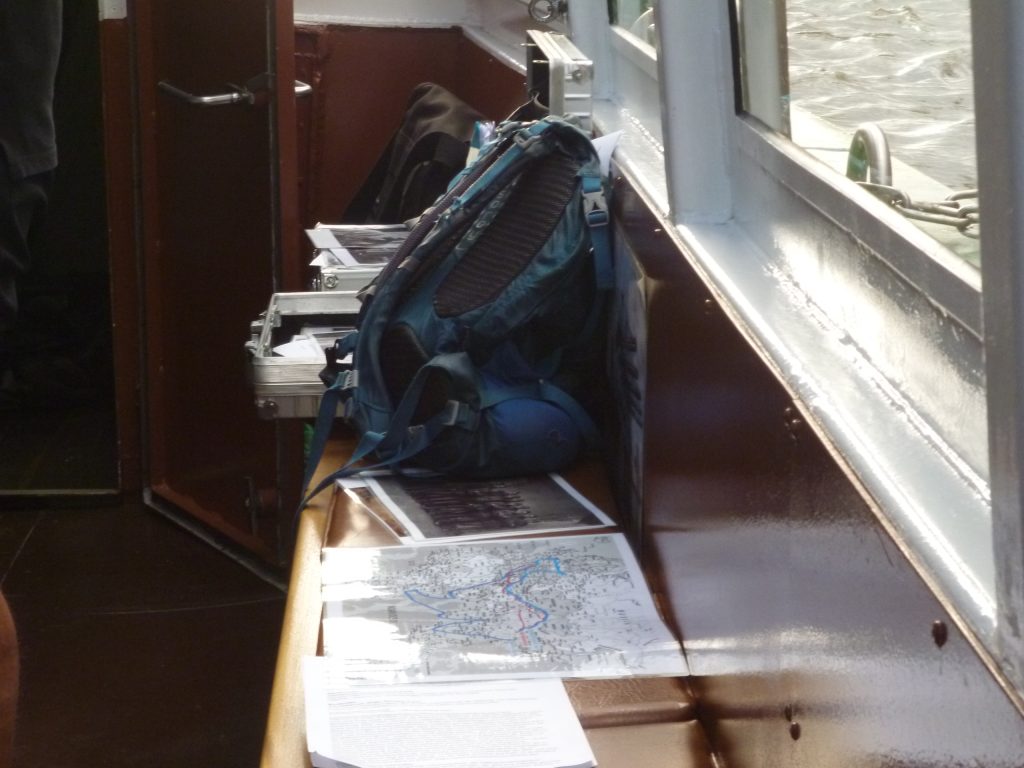
The Hafengruppe has consistently offered critical harbour tours in Hamburg since 1983, covering topics that continue to transform and expand. The tours began as a one-time event connected to the release of a book containing critical research on the unequal trade relations between companies in the Port of Hamburg and the “Global South.” However, due to the popularity of the tour, it became a regular practice of the Hafengruppe, now addressing many more topics.
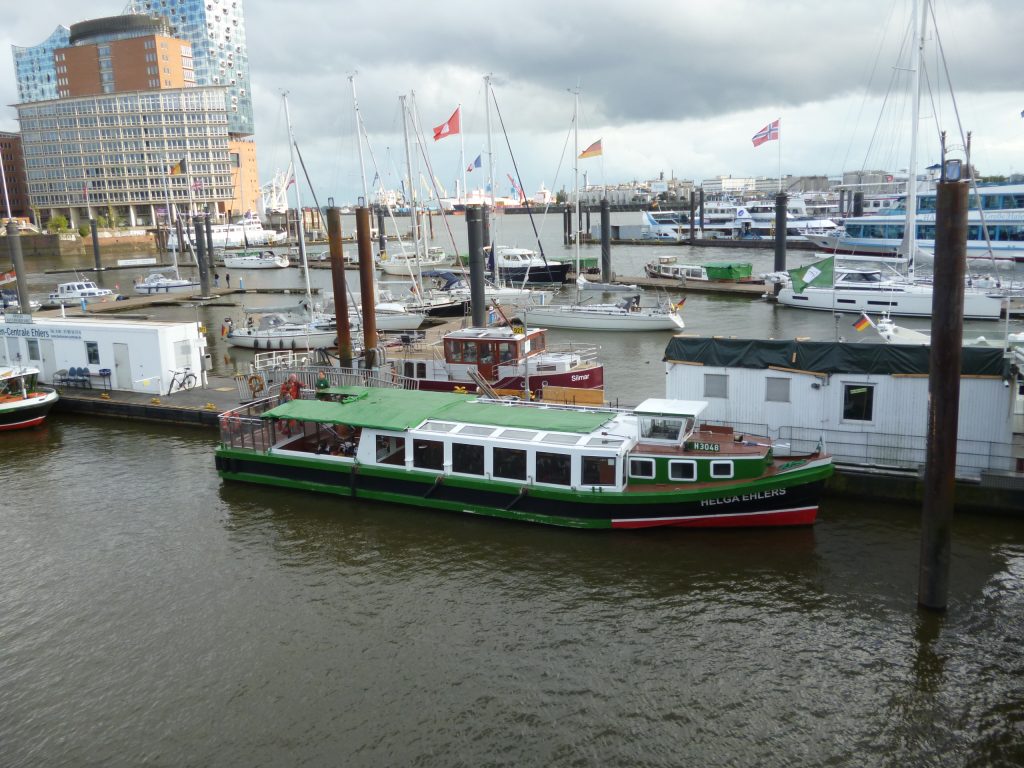
The Hafengruppe offers these excursions, on the one hand, as a tourist activity, advertising them alongside conventional tourist harbour tours and thereby drawing attention to them. On the other hand, it offers bookable tours as leisure or educational activities for interested groups or companies, providing access to the port by boat combined with forms of knowledge that participants would not encounter on conventional tours.
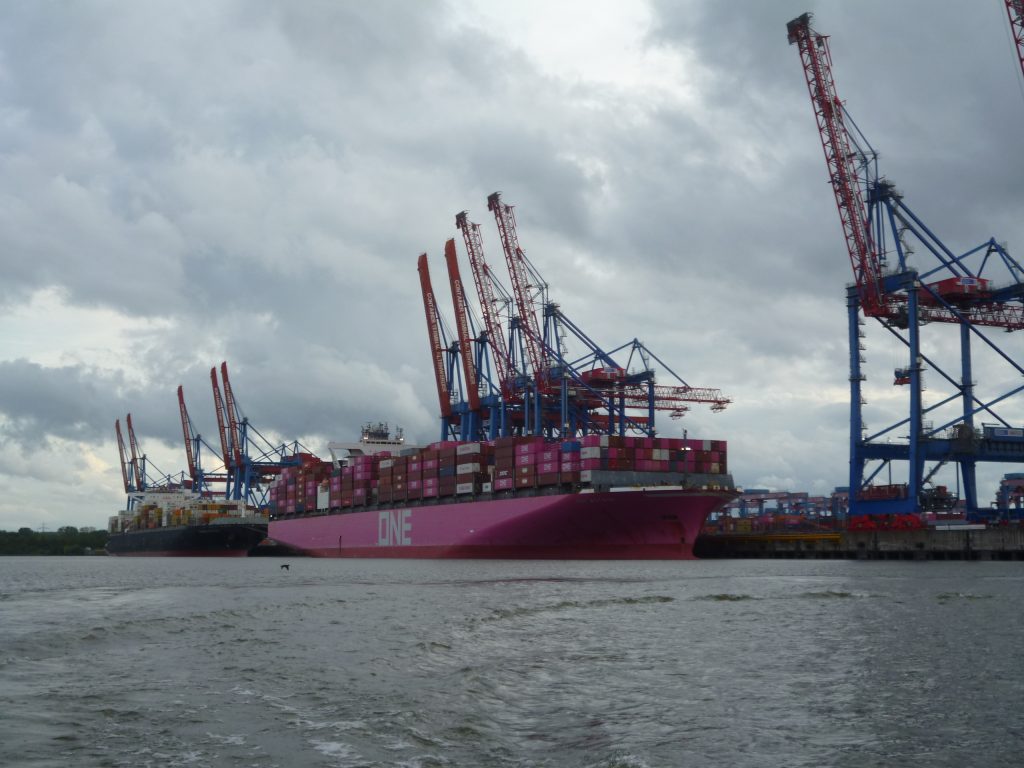
The harbour tours access the Port of Hamburg through the same waters used by vessels of global trade. They visit places of historical and present-day relevance. In Hamburg, in particular, colonial histories are glossed over through the romanticization of “maritime flair,” while present inequalities are obscured by ideas of “globalization” and the city’s identity as a “port city” or “gateway to the world.”
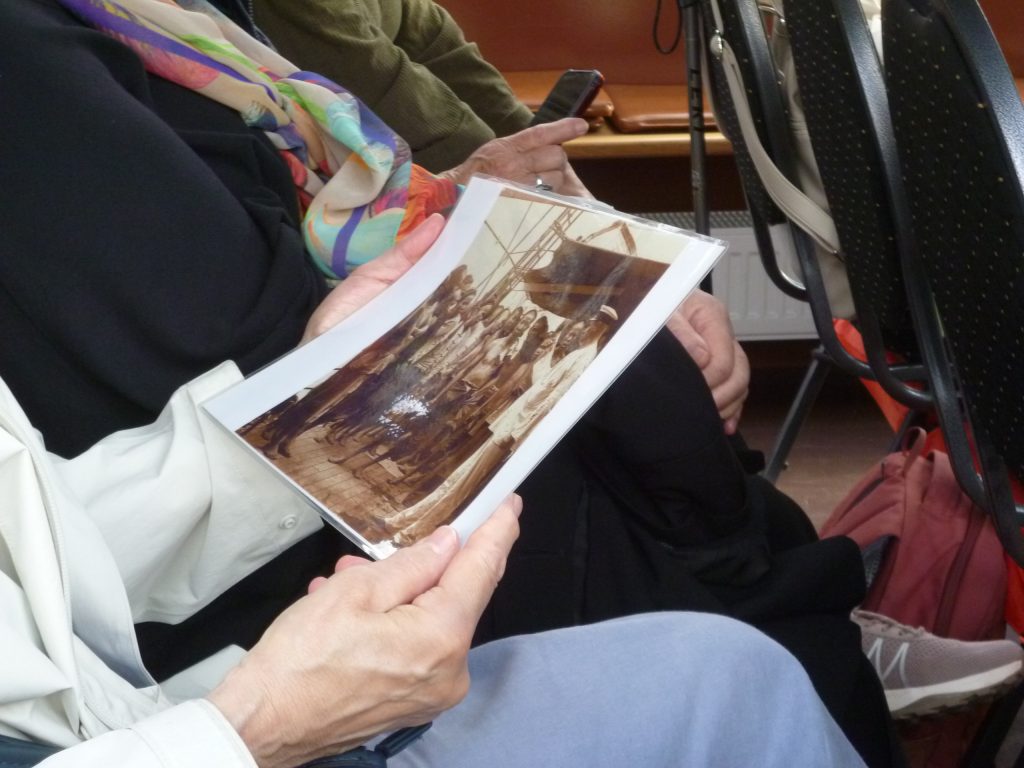
These historically established trade relations remain relevant to the present. The Port of Hamburg is full of artefacts and physical evidence of trade networks: from goods such as scrap, coal, and containers, to ships loaded with industrial composite scrap in the form of cars no longer registrable for use in Germany and exported to West Africa; from piers owned by arms companies that profit from current wars, to a building used by the water police to exercise surveillance and governance over marginalized people and forms of resistance—namely, stowaways. All of these are visible materializations of multiple global networks and relations of power.
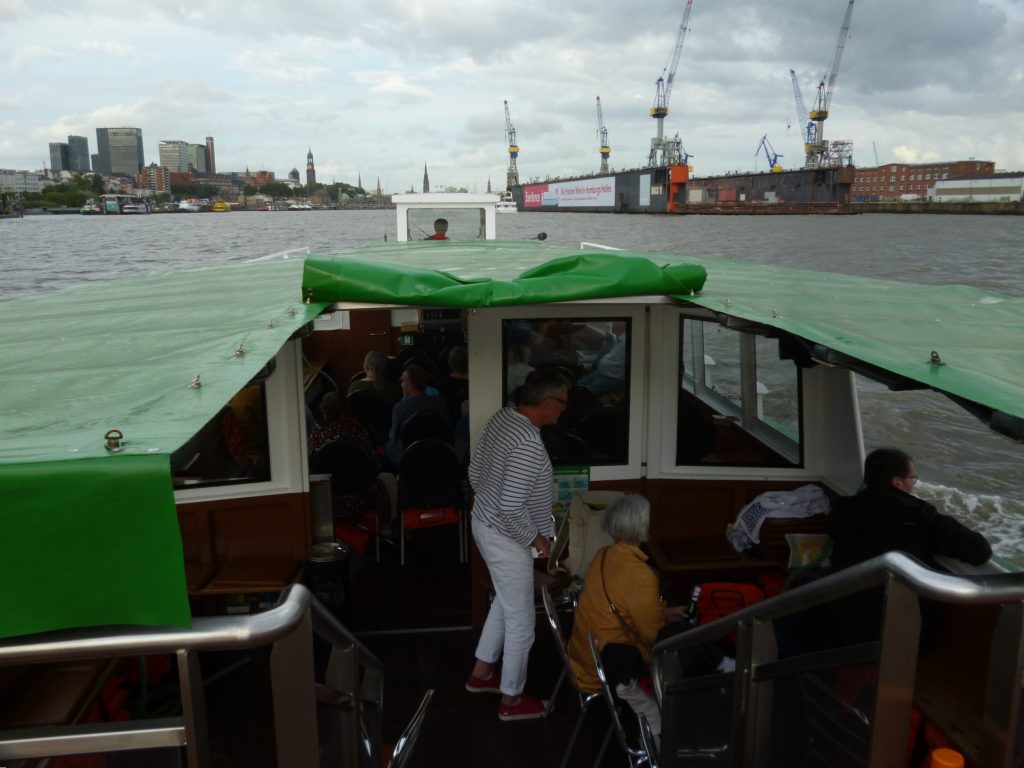
The harbour tour uses the vital infrastructure of the port to access places in a way that cannot be achieved by land. It appropriates the one thing that a harbour cannot claim as private property, yet cannot exist without: water. Due to its classification as national waters, the River Elbe (Hamburg’s main river that connects the Port to the sea), with some exceptions, is generally subject to unrestricted access for both boating and recreational use under the legal principle of common use. Thus, the public right of access to the waters of the Elbe is constitutionally protected against privatization efforts, in contrast to access to the riverbanks.